

Table of Contents
Key Takeaways
- Content review is more than proofreading. It protects brand voice, accuracy, compliance, and user trust.
- Clear objectives, roles, and style guides keep the process smooth, consistent, and easy to follow.
- Checklists and fact-checking help avoid errors and make sure content meets brand and SEO standards.
- Collaboration tools with real-time comments and dashboards allow teams to review together, track progress, and avoid delays.
- Diverse review teams and bias-awareness practices improve inclusivity and quality.
- Efficient workflows and the right technology such as notifications, reporting, and automated checks help manage time pressure and keep reviews on track.
Following content review best practices means evaluating content before publication to ensure it meets quality, accuracy, brand, and compliance standards. It goes beyond proofreading to cover fact-checking, tone consistency, SEO optimization, and user experience. A structured content review process helps teams publish content that is reliable, on-brand, and built to perform.
Significance of reviewing content
All content creators are aware of the importance of accurate and brand-aligned content. Not just accuracy, there is so much more that content review takes care of. Here are some key points to consider:
Maintaining brand consistency: Content review ensures that the material aligns with the brand’s voice, values, and messaging. Consistent branding across all content helps reinforce the brand image and foster trust among the audience.
Avoiding errors and misinformation: A thorough review helps in identifying and correcting errors, inaccuracies, or misleading information. This is vital for maintaining the brand’s credibility and preventing any negative impact on the audience’s perception.
Compliance and legal considerations: Content review helps ensure that the material complies with legal and industry regulations. This is especially important in sensitive industries where adherence to guidelines is crucial to avoid legal issues and maintain a positive brand image.
Enhancing user experience: Well-reviewed content contributes to a positive user experience. Content that is clear, concise, and free from errors is more likely to be well-received by users, leading to increased satisfaction and engagement.
Building trust and credibility: Content that undergoes a rigorous review process is more likely to be accurate and reliable. This builds trust with the audience, as they can rely on the brand to provide credible and trustworthy information.
Optimizing for search engines: Search engines prioritize high-quality content. A thorough review helps ensure that the content is optimized for search engines.
15 effective content review best practices
Here are guidelines and best practices to enhance the effectiveness of content review:
- Establish clear review objectives: Clearly define the goals of the content review process, whether it’s for accuracy, compliance, brand consistency, or user engagement. Having well-defined objectives helps reviewers focus on specific aspects during the review.
- Define roles and responsibilities: Clearly outline the roles and responsibilities of each team member involved in the content review process. This includes content creators, subject matter experts, editors, and any other relevant stakeholders. Clarity in roles prevents confusion and streamlines the review workflow.
- Create a style guide: Develop a comprehensive style guide that outlines preferred writing styles, tone of voice, formatting, and any specific guidelines for your brand. A style guide ensures consistency across all content and serves as a reference for reviewers.
- Use a checklist: Develop a content review checklist that covers key elements such as grammar, spelling, tone, brand voice, formatting, and SEO considerations. For teams building a workflow around this, our guide to content collaboration walks through how to structure the full production process from ideation to publication.
- Prioritize consistency: Maintain a consistent brand voice and messaging throughout all content. Reviewers should pay attention to language, terminology, and the overall tone to ensure that it aligns with the established brand identity.
- Review for accuracy and fact-checking: Verify the accuracy of information presented in the content. Fact-checking is crucial to maintain the credibility of the content and the brand. Ensure that data, statistics, and references are accurate and up-to-date.
- Consider SEO best practices: Check for relevant keywords, meta tags, and other on-page SEO elements. This helps improve the discoverability of the content in search engines. Having an SEO checklist in place can help streamline this step as and when it is needed.
- Include visual inspection: Don’t limit the review process to text alone. Evaluate visual elements such as images, graphics, and formatting. Ensure that visuals are relevant, high quality, and adhere to brand guidelines.
- Gather diverse perspectives: Involve individuals with diverse perspectives in the review process. This could include representatives from different departments, target audience representatives, or individuals with varying levels of expertise. Diverse input helps ensure a well-rounded evaluation.
- Encourage constructive feedback: Foster an environment where reviewers can provide constructive feedback. Encourage open communication and collaboration to improve the overall quality of content. Focus on improvement rather than criticism.
- Iterative review process: Consider implementing an iterative review process, especially for complex or critical content. This involves multiple rounds of review and revisions to refine the content and address feedback progressively.
- Document feedback: Document all feedback received during the review process. This documentation serves as a valuable reference for future content creation and helps track improvements over time.
- Training and development: Provide training for reviewers to ensure they understand the brand guidelines, style guide, and overall content objectives. Continuous learning and skill development contribute to a more effective review process.
- Utilize technology: Leverage technology tools for content review, such as grammar and spell-checking tools, collaboration platforms, and content management systems. These tools can streamline the review process and improve efficiency. For WordPress content teams, Multicollab is a highly effective content creation and review tool. See how Multicollab compares to Google Docs for editorial teams.
- Review User Experience: If applicable, assess the overall user experience of the content. Consider factors such as readability, navigation, and the clarity of the message. A positive user experience contributes to higher engagement.
By implementing these guidelines and best practices, organizations can enhance the effectiveness of their content review process, resulting in high-quality, consistent, and impactful content.
Tools to facilitate content review best practices
Now let’s take a look at some of the most popular tools that facilitate content review for all sorts of content teams.
Grammarly is a comprehensive writing assistant tool that checks for grammar, spelling, punctuation, and style errors. It also provides suggestions for improving clarity and tone in writing.

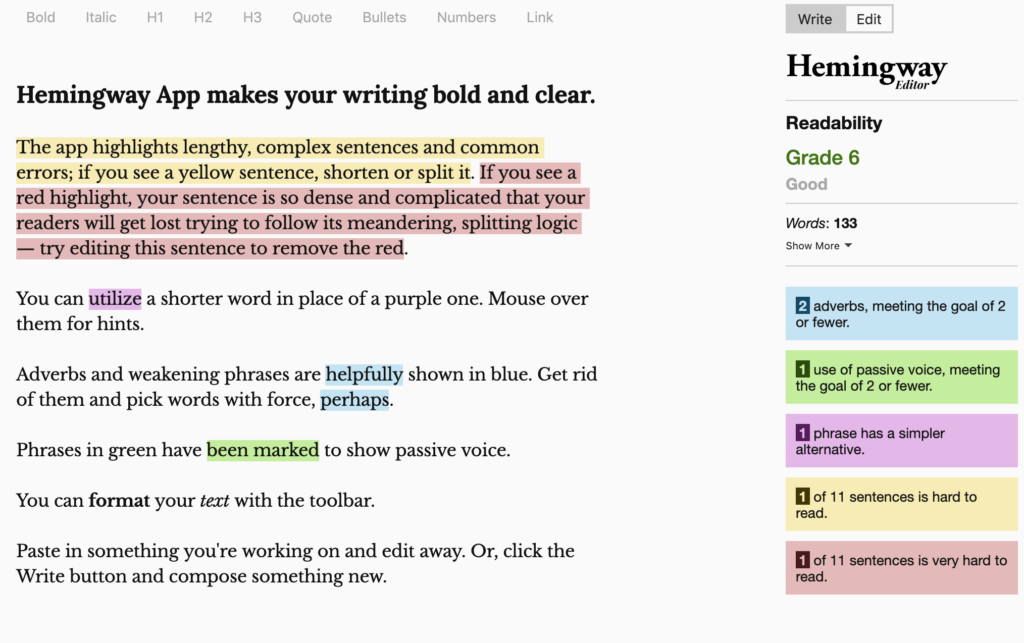
Hemingway Editor helps users improve the readability of their writing by highlighting complex sentences, unnecessary adverbs, and passive voice. It assigns a readability grade to the content.
CoSchedule Headline Analyzer assesses the strength of headlines by analyzing factors like word balance, length, sentiment, and SEO. It provides a score and suggestions for improvement.

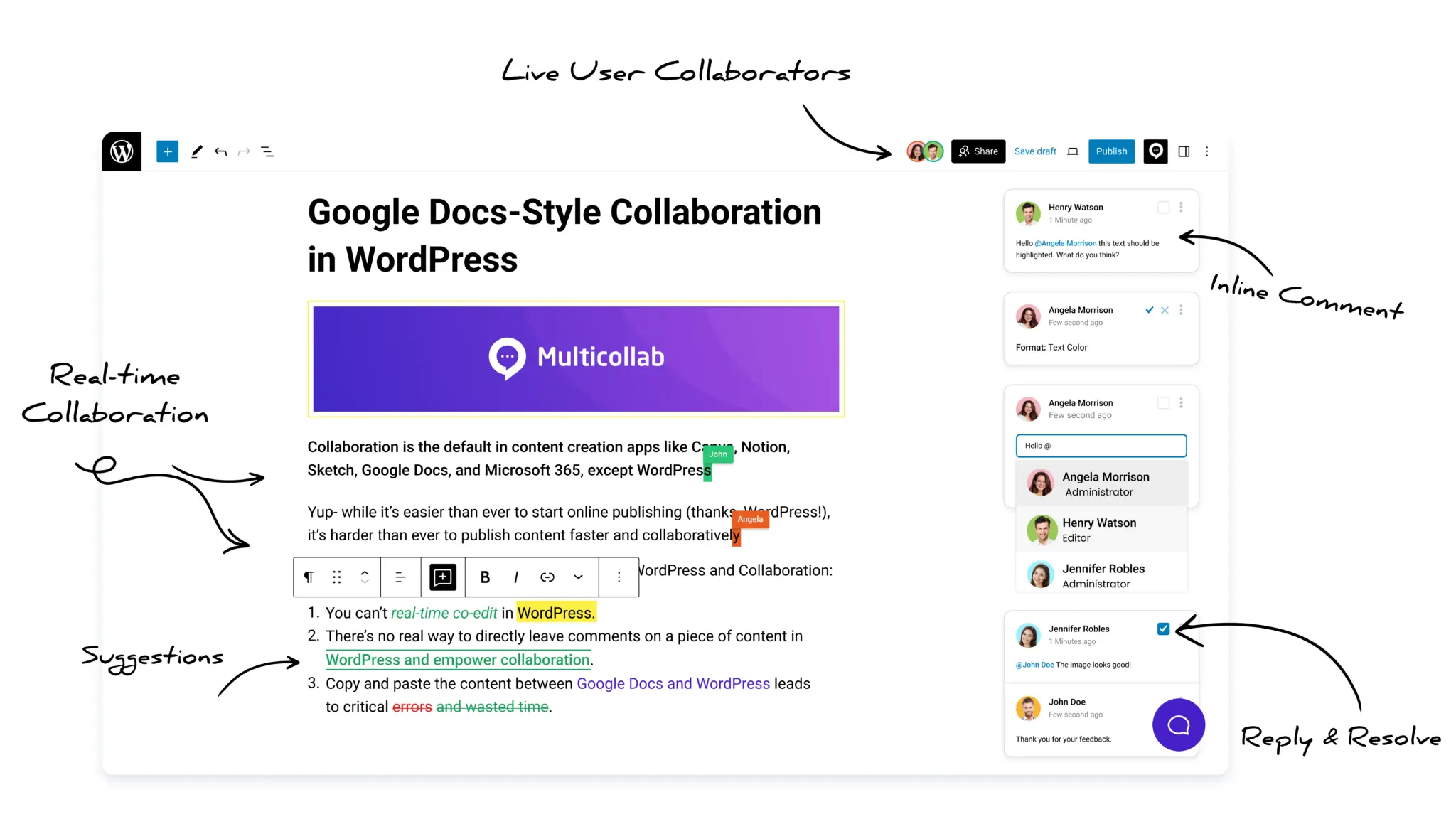
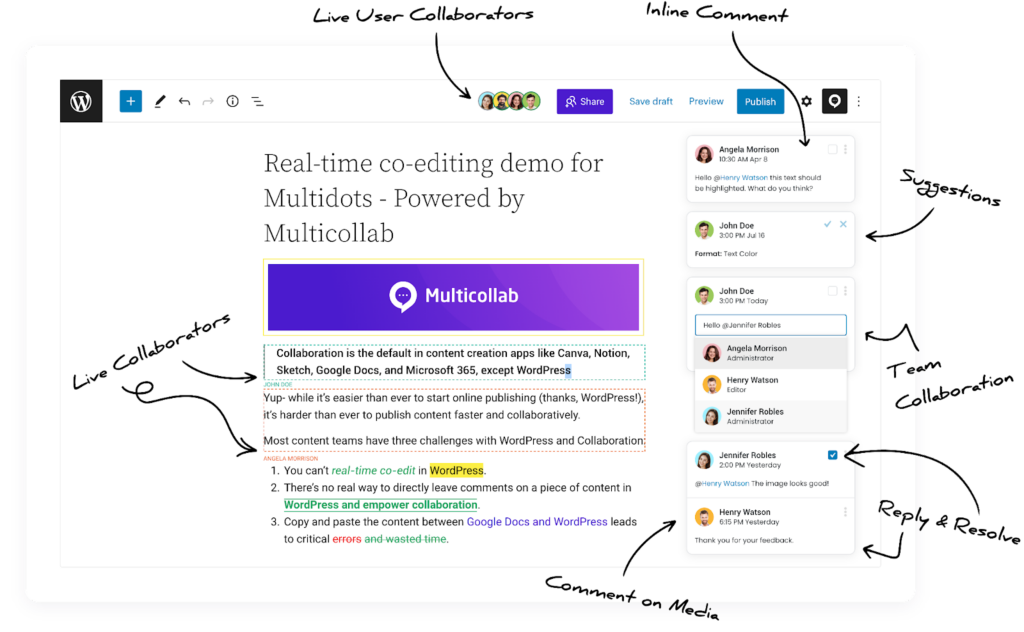
Multicollab enables internal and external stakeholders in the WordPress team to discuss and exchange feedback on all kinds of content by moving the editorial and review process to the Gutenberg Editor. They can add comments and suggestions and tag team members on videos and dynamic content like image carousels and CTA boxes, as it is done with textual content with tools like Google Docs. It enhances strategic content planning by taking team-wide transparency to the next level with its dashboard feature where teams can get an overview of ongoing projects, deadlines, and team activities such as content edits.
Challenges in content review
Content review is a critical phase in the content creation process, but it comes with its own set of challenges. Here are some common challenges faced during content review:
Time constraints:
Balancing the need for efficiency with the requirement for thorough content review poses a significant challenge. Time constraints may result in oversight, potentially compromising the quality of the content.
Strategies:
- Prioritize critical content: Identify high-priority content that requires meticulous review, and allocate more time to critical pieces.
- Establish review timelines: Define clear timelines for each stage of the content review process to ensure that it aligns with production schedules and increases content production speed.
- Utilize technology: Implement content review tools and technologies that automate certain aspects, such as grammar and spell checks, to expedite the process without sacrificing quality.
- Iterative review: Break down the review into iterative cycles, allowing for multiple rounds of feedback and refinement without overwhelming reviewers in a single session.
- Train reviewers: Provide training to reviewers on efficient review techniques, emphasizing the importance of thoroughness without unnecessary delays.
Overcoming bias:
Unconscious biases in content review can lead to subjective evaluations, affecting the quality and fairness of the process. Overcoming biases is crucial for unbiased and inclusive content creation.
Strategies:
- Diverse review teams: Form review teams that represent diverse backgrounds, perspectives, and experiences. This diversity helps mitigate inherent biases by introducing a range of viewpoints.
- Awareness training: Conduct training sessions to raise awareness about unconscious biases. Educate reviewers on recognizing and addressing biases to ensure fair evaluations.
- Checklist for inclusive language: Develop a checklist that includes guidelines for using inclusive language. This helps in minimizing unintentional biases related to gender, race, or other sensitive topics.
- Anonymous review processes: Implement blind or anonymous reviews, where reviewers are unaware of the content creator’s identity. This can reduce the impact of personal biases.
- Regular sensitivity training: Periodically conduct sensitivity training to refresh reviewers on the importance of unbiased content creation and the potential impact of language choices.
- Feedback mechanism: Establish an open feedback mechanism where team members can provide input on potential biases observed during the review process. Encourage constructive discussions to address concerns.
- Use AI for bias detection: Leverage artificial intelligence tools that are designed to detect and highlight potential biases in content. These tools can act as an additional layer of scrutiny.
By addressing time constraints with strategic planning and embracing diversity while actively combating biases, organizations can enhance the effectiveness of their content review processes, fostering the creation of high-quality and unbiased content.
Frequently asked questions about Content review best practices
What is a content review process?
A content review process is a structured workflow where content is evaluated against defined criteria before it is published. This typically includes checks for accuracy, grammar, brand voice, SEO, legal compliance, and visual quality. The goal is to catch issues early and ensure every piece of content meets the team’s standards.
Why is content review important?
Content review protects a brand’s credibility and consistency. Without it, errors, inaccuracies, and off-brand messaging can reach your audience, eroding trust over time. A good review process also improves content quality over time by creating a feedback loop between writers and editors.
What should a content review checklist include?
A solid content review checklist should cover grammar and spelling, tone and brand voice, factual accuracy and source verification, SEO elements (title tag, meta description, keywords, internal links), image quality and alt text, formatting consistency, and a final readability check. Teams can expand this based on their specific content types and compliance requirements.
How do you speed up content review without reducing quality?
The most effective way is to separate review types into stages. A structural review (is the argument clear, is the outline sound) happens first, followed by a copy edit (grammar, tone, clarity), then an SEO and compliance check. Doing all of these in a single pass leads to slower, less focused reviews. Using a checklist and a collaborative tool that keeps feedback in one place also removes a significant amount of back-and-forth time.
What is the difference between content review and content editing?
Content editing focuses on improving the writing itself, including structure, clarity, flow, and style. Content review is broader and includes editing but also covers accuracy, compliance, brand alignment, and SEO. In most teams, editing is one stage within the larger content review process.
How can WordPress teams manage content review without leaving the editor?
Multicollab brings the entire review process into the Gutenberg editor. Team members can leave inline comments, suggest edits, tag colleagues via @mentions, and track the status of all content pieces from a central dashboard, without exporting drafts to Google Docs or managing feedback across separate tools.
Conclusion
When it comes to content creation, the journey never truly ends. It evolves, adapts, and continues; the wheels of content creation and review keep moving. So, in order to embrace continuous improvement in content performance, it is recommended to implement best practices related to content review and let efficient tools like Multicollab be your trusted companion.
So, if you are a WordPress content team, elevate your content collaboration and review journey—get started with Multicollab and redefine how your team works together.
If your team publishes on WordPress, get started by finding the right Multicollab plan for your team.
Download a Free Actionable Guide: 45+ Actionable Tips to Optimize Performance for High-Traffic WordPress Websites
Performance Optimization Techniques: Speed up your site with caching, image compression, and code minification.
Hosting and Scalability Suggestions: Learn to choose the right hosting solutions and scale efficiently.
Security and Protection Guidelines: Safeguard your site from DDoS attacks, malware, and performance threats.
Content and Plugin Management Tips: Optimize your database, plugins, and themes for peak performance.