
Table of Contents
In content creation, efficiency and collaboration determine whether a team publishes great work on time or spends its energy chasing feedback across tools. WordPress is the platform of choice for millions of content teams, but out of the box it was never built for teams. It was built for one person publishing one post.
That gap is where Multicollab lives.
As WordPress Phase 3 gradually brings native collaboration features into core, Multicollab has been the answer for content teams that could not wait. Since 2020, it has been turning the Gutenberg editor into a proper collaborative workspace. With version 5.2 (December 2025), it has grown into a complete editorial governance platform inside WordPress.
This post covers what Multicollab does, who it is built for, and why it remains the most complete collaboration layer available for WordPress teams in 2026.
Why WordPress teams need a collaboration plugin
WordPress is a powerful publishing platform. But as a content team grows, some things break down quickly.
Without a dedicated collaboration layer, teams end up copy-pasting drafts between Google Docs and WordPress, losing formatting and wasting time.
Feedback gets scattered across email threads, Slack messages, and document comments. There is no single place to see who reviewed what, when, or what is still waiting. Publishing a post becomes a coordination problem as much as a writing one.
A good editorial workflow plugin fixes this. It brings the collaboration into WordPress itself, so writers, editors, reviewers, and clients all work in the same place, on the same draft, without switching tools.
Multicollab is built specifically for this. Every feature it offers exists to reduce the friction between someone writing a post and that post being published.
What Multicollab does: Feature by feature
1. Real-Time Co-Editing
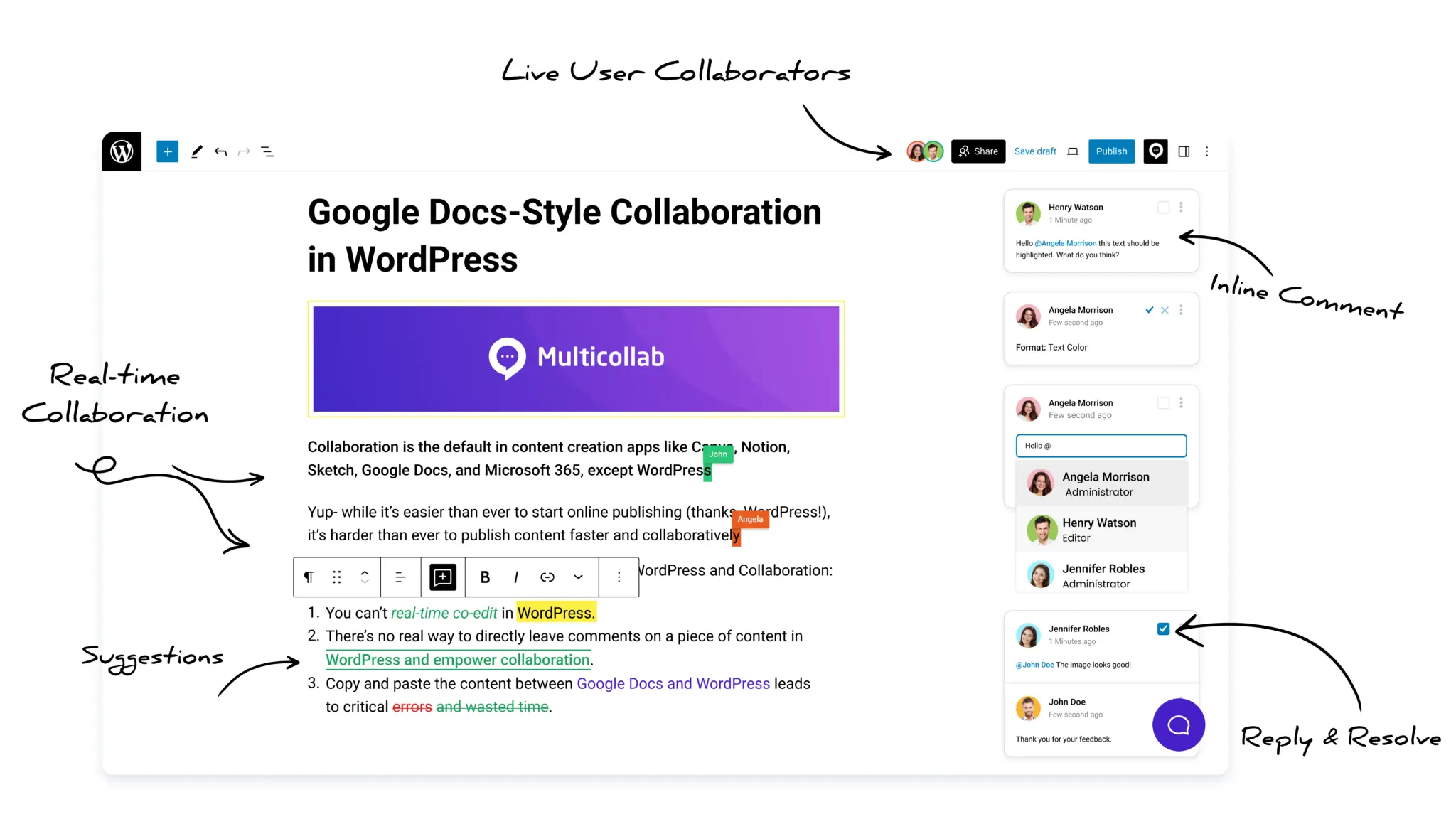
Multiple team members can edit the same post at the same time. Each user’s cursor and block activity is visible to others, so there is no more “someone else is editing this post” lockout screen. Changes appear live, and the experience mirrors what teams already know from Google Docs.
Real-time collaboration supports up to five concurrent users and works across the standard Gutenberg editor. It does not currently work alongside Suggestion Mode, so teams can choose the right mode for each stage of their workflow.
Since version 5.1, real-time collaboration performance has been significantly improved, eliminating post freezes and lag that some users experienced in earlier versions. Version 5.2 added global controls to enable or disable real-time collaboration for all posts, specific posts, or selected categories directly from Multicollab settings.
2. Inline Commenting
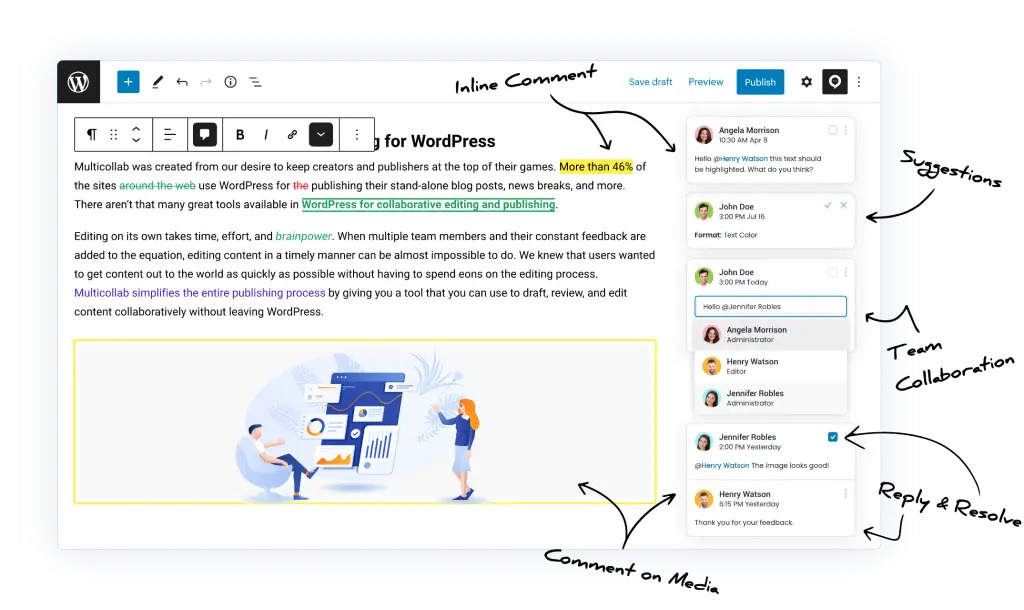
Select any text or media in the block editor and add a comment, exactly like you would in Google Docs. Inline Comments can be assigned via @mention, replied to, resolved, and shared via link.
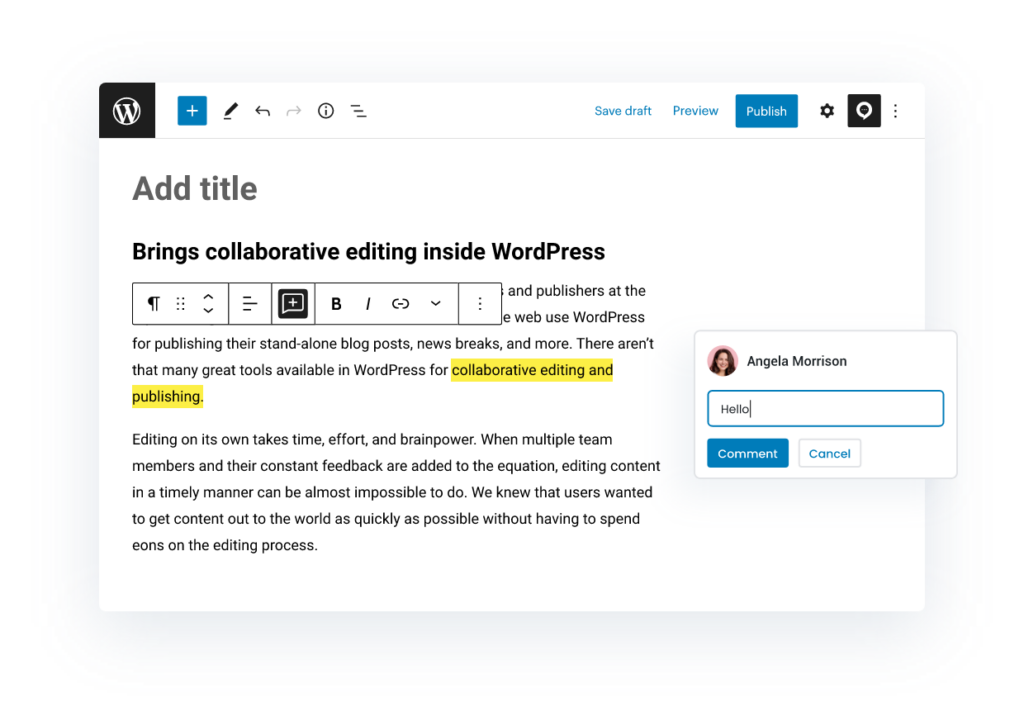
Collaborators can attach files directly to comments, including JPG, PNG, DOC, and PDF files, so reference material and feedback live together in the same thread.
3. Suggestion Mode
Suggestion Mode is Multicollab’s version of track changes. Any edit made in Suggestion Mode is highlighted in the post: additions appear in green, deletions in red. The rest of the team can accept or reject each change individually, or accept and reject all at once. Combined with @mentions and notifications, the full team can navigate a review round without leaving WordPress.
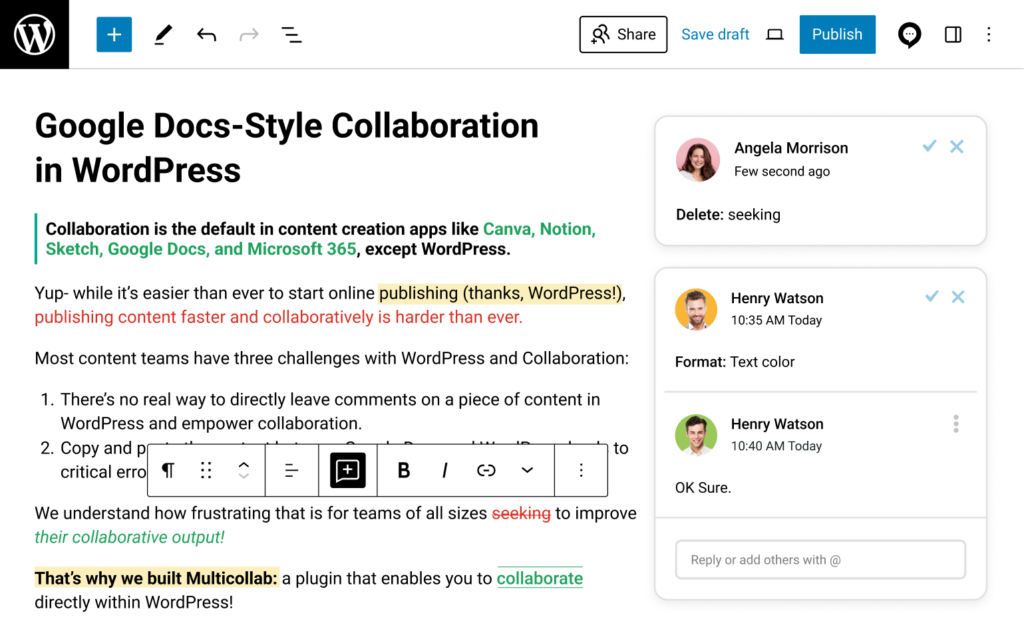
Suggestion Mode works on text blocks, captions, and a wide range of custom and dynamic blocks. A full compatibility list is available in the Multicollab documentation.
Note: Suggestion Mode and Real-Time Collaboration are separate modes. Teams use Suggestion Mode for async review rounds and switch to real-time editing for live collaborative sessions.
4. Content Workflows (New in v5.2)
This is the biggest addition to Multicollab in 2025. Content Workflows bring structured, step-based editorial governance directly inside WordPress.
Admins can create custom workflow sequences (for example: Draft, Review, Approval, Publish) and define the rules for each step. Each step can have assigned reviewers, role-based permissions, and custom status labels. Team members can update workflow status, assign the next reviewer via @mention, and track timelines all from the Multicollab sidebar while editing.
The standout sub-feature here is Live Content Versioning. Teams can create a new draft of an already-published post and run it through the full review and approval cycle before the update goes live. This closes the gap that existed for teams managing evergreen content that needs periodic updates without risking the live version.
Custom workflow steps can be enabled or disabled without deletion, so teams can adjust their process without losing configuration history.
5. Editorial Checklist (New in v5.0)
The Editorial Checklist ensures every post meets the team’s publishing standards before it goes live. Admins configure a checklist of tasks (for example: featured image added, word count between 800 and 1500, at least one internal link, alt text on all images). Each task can be set as required or optional.
The checklist appears in the Multicollab sidebar while editing and updates in real time as conditions are met. If a post is published with incomplete required items, an alert fires. The WordPress post and page list shows a checklist progress column so editors can see completion status across all content at a glance.
Checklists can be applied per post type and restricted by user role, so contributors see a different checklist than senior editors if needed.
6. Guest Collaboration
Clients, external contributors, or anyone outside the WordPress user list can be invited to review or comment on a post via email. They receive a magic link with a 7-day expiry and can participate as either a Commenter (can add and reply to comments) or a Viewer (read-only access to the draft and comments). No WordPress account is needed.
This removes the overhead of creating temporary user accounts for one-off reviewers and keeps sensitive draft content within a controlled access link.
7. Notifications (Email and Slack)
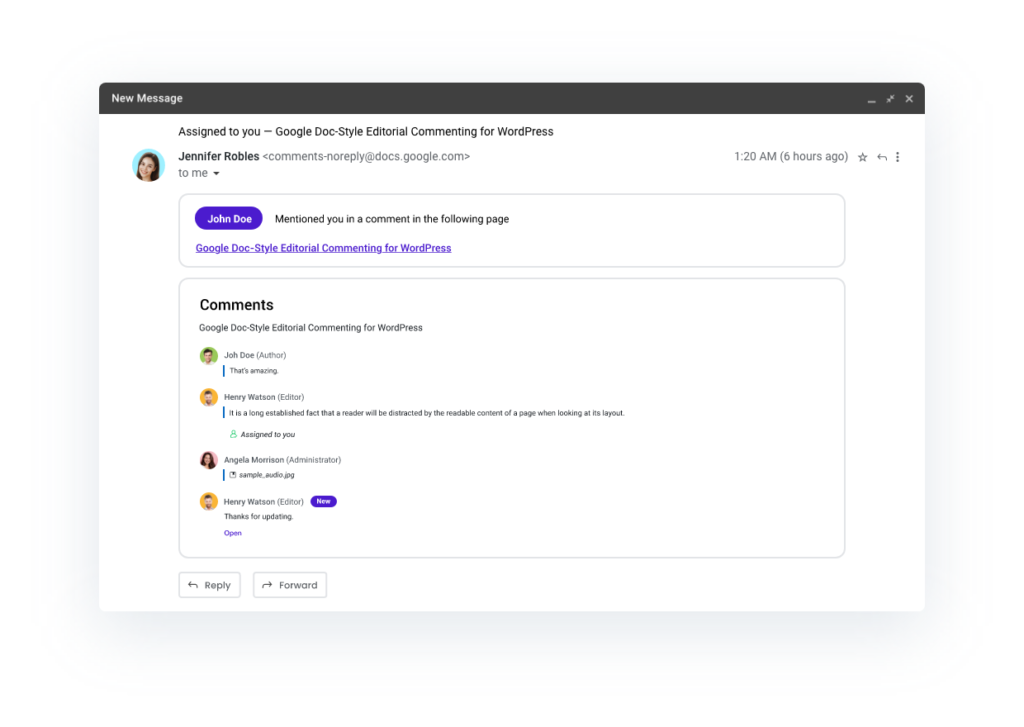
Every mention, reply, comment, and suggestion triggers instant Email Notifications. Team members can click directly from the email back into the relevant post in WordPress.
For teams using Slack, Multicollab sends real-time notifications to any Slack channel of the team’s choice. Mentions, replies, and comment activity all land in Slack, so collaboration stays visible in the tool teams are already watching throughout the day.
Since version 5.1, comment boards in the sidebar sync instantly across all collaborators, and real-time notification updates for new activity appear without a page refresh.
8. Custom Permissions
Administrators control exactly who can do what with comments and suggestions. Permissions can be configured per user role for adding comments, resolving comment threads, and accepting or rejecting suggestions. This matters for teams where only senior editors should be able to close feedback loops or where contributors should be able to comment but not approve changes.
9. Reports and Activity
The Multicollab dashboard gives a full view of collaboration activity across all posts and pages. The Activity Timeline filters by user, content category, and timestamp, making it easy to see what was reviewed, who actioned feedback, and when. The Quick Snapshot view shows the latest comment activity per post without having to open each one individually.
The dashboard received a redesigned interface in version 5.2, with a cleaner layout and improved navigation.
Who Multicollab is built for
Publishers and media teams benefit most from Suggestion Mode and Content Workflows. The track-changes model is familiar to anyone who has worked in editorial, and the workflow structure gives managing editors visibility over every post’s status without chasing individual team members.
Agencies use Multicollab to bring clients into the review process without creating WordPress accounts or sharing staging credentials. Guest Collaboration with its 7-day link, combined with the Commenter and Viewer roles, handles client review cleanly.
Enterprise teams running high volumes of content across multiple post types benefit from the combination of Custom Permissions, Editorial Checklists, and Content Workflows. They can enforce publishing standards at scale and maintain audit trails of every change and approval decision.
Why Multicollab instead of Google Docs plus WordPress
The most common alternative to Multicollab is not another plugin. It is Google Docs for writing and review, then copy-pasting into WordPress when ready to publish.
The problems with that approach are well known: formatting breaks on paste, comments are lost, and the moment a draft moves into WordPress it is cut off from the review history in Google Docs. The two tools never speak to each other.
Multicollab keeps everything inside WordPress. Comments, suggestions, approvals, checklists, and version history all live alongside the content itself. Nothing gets left behind when a post moves from draft to review to published. The content and its entire editorial history stay in one place, on the team’s own server.
Getting started
Multicollab is a Pro plugin. It includes the full feature set: real-time co-editing, Suggestion Mode, Guest Collaboration, Content Workflows, Editorial Checklist, Slack notifications, Custom Permissions, and the complete reporting dashboard.
A 14-day free trial is available with no contract and no obligation.
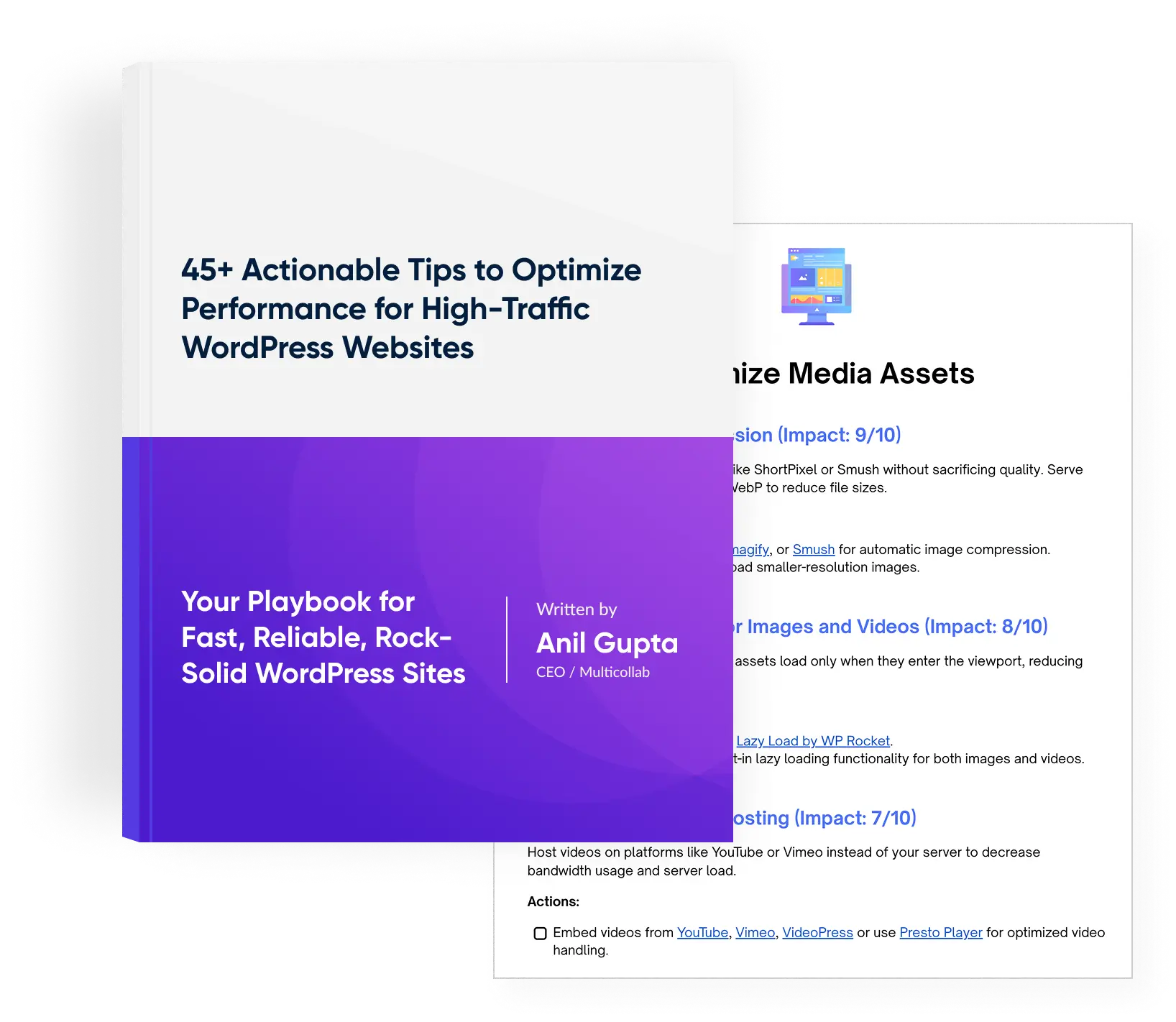
Download a Free Actionable Guide: 45+ Actionable Tips to Optimize Performance for High-Traffic WordPress Websites
Performance Optimization Techniques: Speed up your site with caching, image compression, and code minification.
Hosting and Scalability Suggestions: Learn to choose the right hosting solutions and scale efficiently.
Security and Protection Guidelines: Safeguard your site from DDoS attacks, malware, and performance threats.
Content and Plugin Management Tips: Optimize your database, plugins, and themes for peak performance.