

Table of Contents
Search Engine Optimization (SEO) ensures the sustained online success of a business. And, as the search engine ranking landscape evolves, its prevalence has made SEO a non-negotiable factor in achieving visibility and relevance. Effectively managing all the multifaceted components of SEO is not a piece of cake. This is where the concept of SEO project management emerges as a beacon of strategic importance.
There’s stuff like finding the right words people use to search (keywords), making sure your website is easy to use (technical stuff), and getting other websites to talk about yours (backlinks). To really succeed, you need to understand and take care of every piece of the SEO puzzle.
To combine all these parts of the puzzle, SEO project management becomes the compass, guiding businesses through the many tasks, strategies, and collaborations required for optimum results.
For WordPress teams looking to plan, track, and collaborate on their search engine optimization projects, this comprehensive guide delves into all the essential steps of SEO project management, emphasizing the approaches, navigating through the intricacies and offering a comprehensive solution.
Why is Project Management so important in SEO?
SEO is a long-term strategy where tangible results may manifest only after a while, requiring a sustained effort and strategic planning. From technical audits to content planning, keyword research, and reporting, these diverse tasks demand collaboration from teams operating across different facets of the project. SEO Project management ensures teams stay focused and committed to the overarching goals.
Within the team, transparent and open communication fosters collaboration, preventing silos and ensuring that everyone is on the same page. Externally, with stakeholders and clients, transparent communication is essential for setting expectations and demonstrating the value of ongoing SEO efforts.
Also, project managers play a pivotal role in allocating resources wisely, ensuring that all aspects of the SEO campaign receive the attention they deserve for sustained success.
The Role and Required Skills of an SEO Project Manager
Strategic Planning: The SEO project manager is the campaign’s architect, developing and implementing a comprehensive SEO strategy aligned with business goals. This involves identifying key performance indicators (KPIs) and mapping the roadmap for long-term success.
Team Coordination: Collaboration is key in SEO, and the project manager ensures that team members work cohesively toward common objectives. This involves assigning tasks, facilitating communication, and ensuring everyone understands their role in the larger SEO strategy.
Results Monitoring: The project manager is the analytical backbone of the campaign, constantly monitoring and analyzing data to assess project performance. This includes tracking keyword rankings, website traffic, and other metrics to measure the effectiveness of implemented strategies.
Adjustments and Optimizations: The project manager uses data insights to make informed adjustments to the strategy, ensuring continuous optimization and responsiveness to algorithm changes and market trends.
Management of SEO Tools & Software: The SEO project manager oversees the utilization of various tools and software integral to campaign success. This includes platforms for keyword research, analytics, and SEO auditing, among others.
Necessary Skills of an SEO Project Manager:
Strategic Thinking: The ability to envision and implement a long-term SEO strategy aligned with business objectives.
Attention to Detail: SEO success often hinges on the details; the project manager must ensure everything is handled well.
Data Analysis: Proficiency in interpreting data to derive actionable insights for strategy refinement.
Understanding of SEO Principles and Tools: A comprehensive knowledge of SEO best practices and proficiency in using relevant tools and software.
Exceptional Communication: Effective communication within the team and with external stakeholders is paramount for seamless collaboration and successful outcomes.
How to build an effective SEO Project Management Plan
“Crafting a successful SEO project management plan is always a result of a meticulously structured layout. This entails establishing detailed goals, drawing task outlines, allocating budgets judiciously, implementing effective communication strategies, and carefully measuring and reporting progress.”
Nimesh Patel, Product Growth Manager @ Multicollab
Here’s a comprehensive guide to building a robust SEO project management plan:
1. Define your goals
The foundation of any SEO project lies in clearly defined goals. They serve as the guiding star, providing direction and purpose throughout the campaign. It’s crucial to follow the SMART formula – Specific, Measurable, Achievable, Relevant, and Time-Bound – when setting these goals.
Common KPIs such as organic traffic, search engine rankings, conversion rate, bounce rate, and backlinks should be considered. Remember, goals will vary based on the unique needs of the business.
Organic Traffic: Visitors from non-paid search results – indicates SEO success in boosting visibility.
Search Engine Rankings: Positions for target keywords – measures content and optimization effectiveness.
Conversion Rate: Percentage of visitors completing a desired action – reflects website engagement and persuasion.
Bounce Rate: Percentage leaving after one page – highlights content or UX issues.
Backlinks: Links from external sites – boosts site authority and credibility.
Page Load Speed: Time for a page to load – critical for user experience and SEO.
Click-Through Rate (CTR): Clicks vs. impressions – assesses title and description effectiveness.
Pages Per Session: Average pages viewed in one session – indicates overall audience engagement.
By monitoring these KPIs, you gauge SEO effectiveness and identify areas for optimization, steering your strategy towards sustained growth.
2. Outline key SEO tasks to complete
Establishing a roadmap for your SEO project before initiation is foundational to success. Outlining specific tasks is not just a formality but a strategic imperative ensuring optimal resource allocation and efficient time management.
- A technical audit serves as the groundwork, evaluating the website’s infrastructure, identifying potential issues, and laying the foundation for a robust SEO strategy.
- Keyword research follows suit, delving into the language and terms your audience uses to ensure your content aligns with their search intent.
- Competitor analysis is another crucial facet, providing insights into the strategies that have proven effective in your industry.
- Content production and optimization are pivotal in tailoring your material to be both engaging and search engine-friendly.
- The critical link-building process fosters your website’s authority while on-page and off-page SEO fine-tune elements for enhanced visibility.
It’s important to note that the specific nature of these tasks is contingent on the unique scope and requirements of each project. Different businesses will demand distinct approaches.
By defining tasks ahead of time, you set the stage for seamless project management, minimizing uncertainties and enabling your team to navigate the intricacies of the project with clarity and purpose. This proactive approach not only enhances efficiency but also lays the groundwork for a more agile and adaptable SEO strategy as the project unfolds.
3. Allocate your team budget and resources
One of the foundational pillars of effective SEO project management is the meticulous allocation of budget and resources. This process is not merely a financial exercise, but it sets up the stage for a well-equipped, collaborative, and efficiently managed SEO project. By defining responsibilities, expectations, and budget allocations early, you pave the way for a seamless execution that aligns with project goals and client expectations.
While time spent by team members on various tasks is a primary consideration, other costs must be factored in. Access to the right tools is vital for effective task execution. From project management and client management tools to communication platforms, editorial collaboration tools, and tools for keyword and competitor research, the proper software arsenal is indispensable.
Alongside budget allocation, defining the responsibilities and expectations of team members early in the project lifecycle is equally vital. This proactive step ensures that each team member understands their role, fostering a harmonious workflow. It enables project managers to confirm resource adequacy and plan for any potential capacity needs, whether by bringing in additional team members or leveraging the expertise of freelancers.
4. Communicate effectively
Effective communication ensures the project manager is aware of potential issues and bottlenecks. This proactive approach allows for timely adjustments and strategic planning to circumvent challenges.
Internal catch-ups, held weekly or even more frequently, serve as touchpoints for the project team, fostering collaboration and keeping everyone on the same page. Externally, regular meetings with the client, whether fortnightly or monthly, provide opportunities for status updates, goal alignment, and addressing any emerging concerns. This consistency ensures that all stakeholders are well-informed about the project’s progress and direction.
5. Measure and Report Your Progress
In SEO task management, measuring and reporting progress is pivotal for strategic success. It transforms SEO from a set-and-forget task into an adaptive, responsive journey, allowing real-time adjustments and refinements. Regular evaluation of SEO strategy performance is crucial for refining ongoing tasks – ensuring they align with broader business objectives.
Transparency is key, with progress reports fostering trust and providing clients with a clear view of the tangible impact of SEO efforts. This practice also enables adaptability, allowing quick adjustments based on real-time data to navigate changing algorithms and market dynamics.
Effective communication within the team and with clients is facilitated through progress reports, preventing misalignments and enhancing collaboration. Ultimately, progress reports provide a solid foundation for strategic decision-making, allowing the scaling of successful strategies and the exploration of new opportunities.
Enhancing SEO Task Management with Multicollab
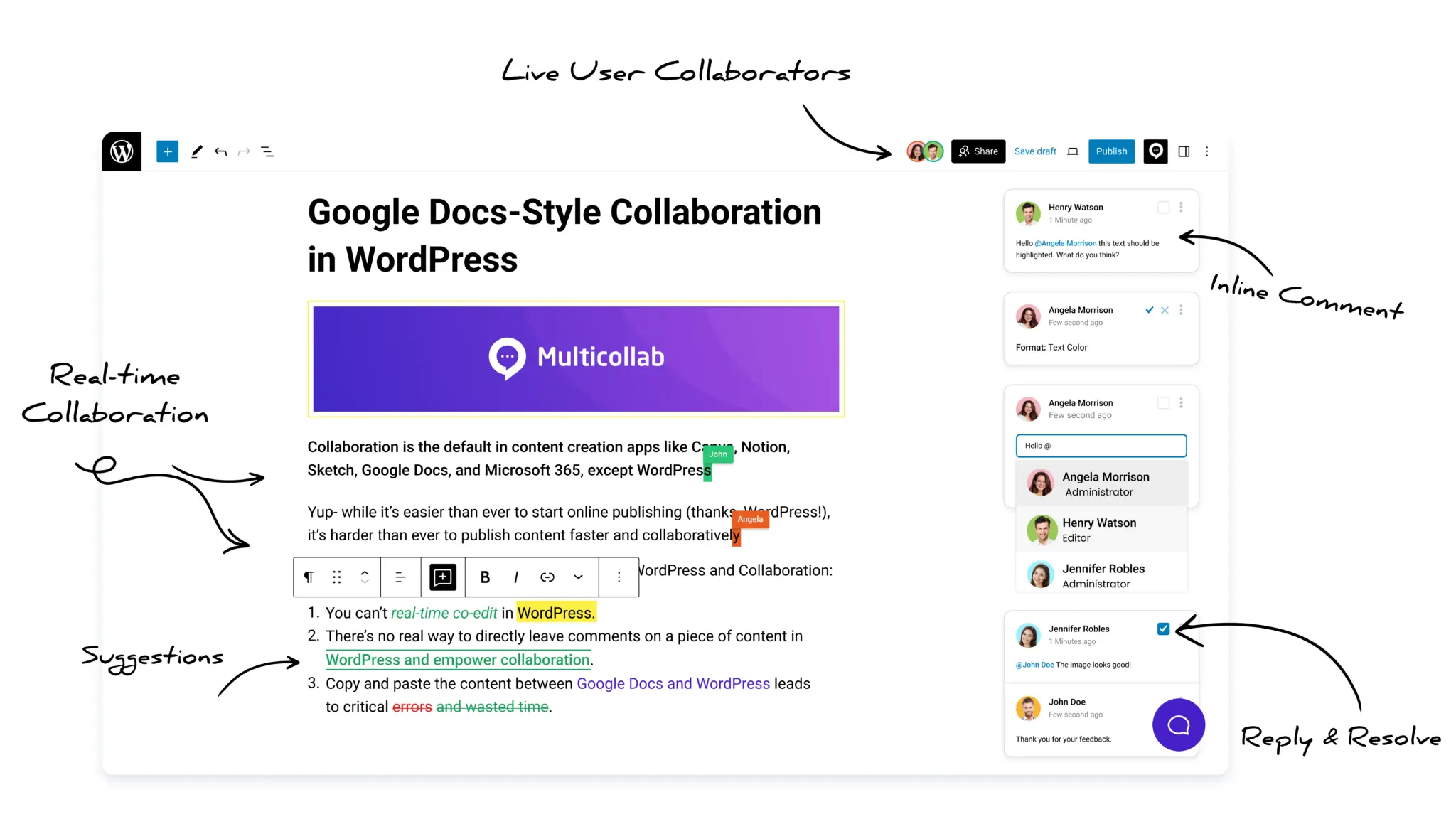
SEO project management is an ongoing process of improvement and collaboration. Multicollab emerges as an indispensable SEO Task management solution to streamline workflows and enhance efficiency directly within your WordPress editor. Multicollab not only simplifies task management but also facilitates continuous improvement and collaborative success in your SEO projects.
Here are the key features of Multicollab that make it an indispensable tool for SEO agencies or project managers:
Collaborative Real-Time Editing: Simultaneous editing allows your team to work together seamlessly on content creation and optimization in real-time.

Email and Slack Notifications: Timely notifications inform everyone about updates, revisions, and task progress.

Guest Collaboration and Custom Permissions: Facilitate collaboration with external contributors through guest access. Tailored permissions control access levels, maintaining security and workflow integrity.

Powerful Activity Timelines: Gain a comprehensive view of project progression through detailed activity timelines. Track changes, revisions, and contributions for a transparent overview.

Snapshot Reporting: Capture project milestones with snapshot reporting, providing a visual representation of your SEO progress over time. Use this feature to celebrate successes and identify areas for enhancement.
Multicollab is an indispensable tool for SEO agencies and project managers seeking not just a tool but a strategic partner in the pursuit of SEO excellence. With its collaborative features, notifications, guest access, and reporting capabilities, Multicollab seamlessly integrates into your workflow, enhancing productivity and contributing to the ongoing success of your SEO initiatives.
Take the next steps to level up your SEO project management
As we wrap up our journey through the intricacies of SEO project management, it’s crucial to reinforce the key takeaways. Remember: Clear goal setting, task outlining, budget allocation, communication strategies, and regular measurement are essential to a successful plan. Hence, having a robust project management tool is non-negotiable.
With an efficient tool like Multicollab serving as a strategic ally in achieving SEO excellence, you can elevate your SEO project management in no time.
Get started with Multicollab to take the next steps to level up your SEO project management.
Download a Free Actionable Guide: 45+ Actionable Tips to Optimize Performance for High-Traffic WordPress Websites
Performance Optimization Techniques: Speed up your site with caching, image compression, and code minification.
Hosting and Scalability Suggestions: Learn to choose the right hosting solutions and scale efficiently.
Security and Protection Guidelines: Safeguard your site from DDoS attacks, malware, and performance threats.
Content and Plugin Management Tips: Optimize your database, plugins, and themes for peak performance.