

Table of Contents
Multicollab is a WordPress plugin that helps publishing teams maintain editorial quality at scale, with real-time editing, inline comments, suggestion mode, and approval workflows in the Gutenberg editor.
Key Takeaways
- SEO for publishers in 2026 means optimizing for two surfaces at once: traditional search results and AI-generated answers.
- Answer Engine Optimization (AEO) matters now: content must be structured so AI systems can extract and cite it, not just rank it.
- E-E-A-T and clear author attribution are critical for publishers, especially on topics where trust drives rankings.
- Depth beats volume. Thin, high-velocity content is penalized; fewer, deeper, well-edited pieces win.
- Editorial quality is an SEO asset. A strong review process, backed by a tool like Multicollab, protects the standards that both Google and AI engines reward.
For publishing companies, organic search is one of the most valuable traffic channels there is. But the way to win it has changed more in the last two years than in the previous ten. AI-generated answers now sit above organic results for a large share of informational queries, and the old playbook of publishing at volume to rank for everything no longer works.
This guide covers SEO for publishers as it actually works in 2026: the techniques that still matter, the new ones that have become essential, and how editorial quality has quietly become one of the strongest ranking signals a publisher has.
How SEO changed for publishers
Two shifts define the current landscape, and publishers feel both acutely.
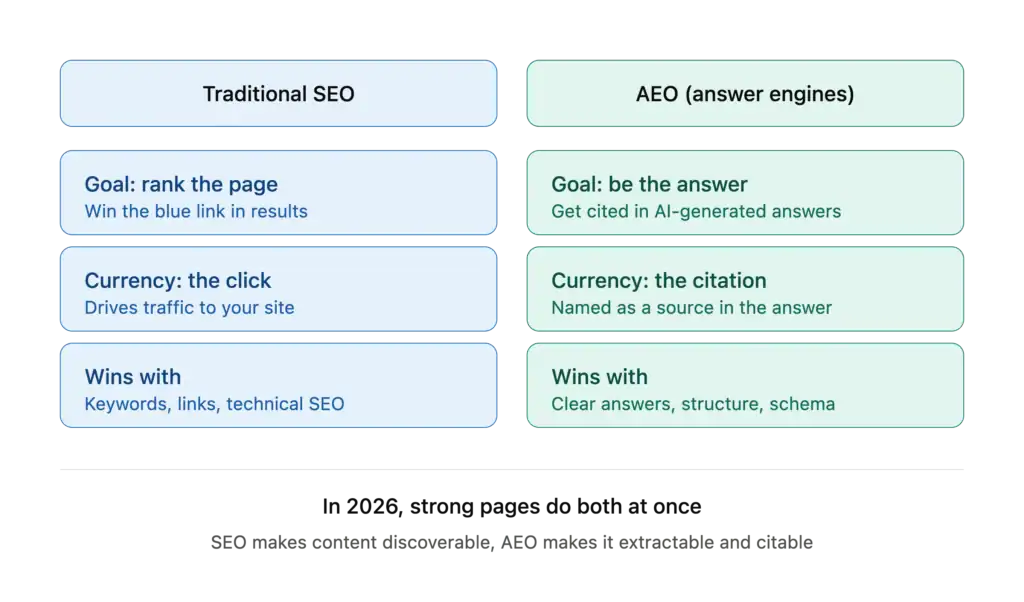
First, AI answers changed the click. Google’s AI Overviews and answer engines like ChatGPT and Perplexity now synthesize answers directly, and a large share of searches end without a click. This does not end SEO, but it adds a second discipline: Answer Engine Optimization (AEO), optimizing content so AI systems can extract and cite it, not just rank it. The two work together. Traditional SEO makes your content discoverable; AEO makes the best parts of it easy for AI to surface.
Second, quality bars rose sharply. Google’s helpful content systems and improved spam detection now actively penalize thin, mass-produced content, and AI engines simply ignore low-trust sources. For publishers, this means the volume-first model is dead. Fewer, deeper, well-edited pieces outperform a high-velocity content factory.
The rest of this guide reflects that reality.
1. Optimize for answers, not just rankings (AEO)
Ranking a blue link is no longer the only goal. You also want to be the source an AI answer cites. The practices that make content answer-ready:
- Answer the main question early. Open with a clear, plain-language answer in the first few lines, then expand into depth. A page that buries its answer may rank but fail to get cited.
- Structure for extraction. Use logical headings, short answer-focused sections, and clear formatting so AI systems can parse and reconstruct your content.
- Use real buyer and reader questions as headings. This aligns your structure with how people actually query, in search and in AI chat.
- Add schema markup. Structured data is foundational to both Google and AI engines, and one of the highest-ROI technical investments a publisher can make.
A caution worth heeding: Google’s own 2026 guidance warns against AEO “hacks” like artificial content chunking or inauthentic mentions, and stresses that effective SEO, genuinely useful content, remains the foundation. Optimize for answers, but do not game them.
2. Build E-E-A-T and clear author attribution
Experience, Expertise, Authoritativeness, and Trustworthiness matter more than ever, and they matter most for publishers, who live or die on credibility.
Strengthen entity signals. AI systems think in entities, not keywords, so consistent, clear information about your brand, authors, and topics across your site helps both search and AI understand and trust you.
Attribute every piece to a real author with genuine expertise, especially on topics affecting readers’ money, health, or safety, where anonymous content is a real liability.
Show experience and evidence. First-hand knowledge, original data, and specific, source-attributed facts are far more likely to rank and to be cited. Replace generic claims like “industry-leading” with concrete, sourced data points.
3. Prioritize depth over volume
The “publish five posts a week to cover every long-tail term” strategy is not just ineffective now, it is counterproductive. Thin content competing on long-tail keywords is penalized by Google’s quality signals and ignored by AI engines that prefer depth.
What works instead:
- Fewer, better, longer pieces with original research and a clear point of view.
- A content audit that updates high-potential existing pages, which is often more efficient than publishing from scratch. (This very guide is an example.)
- Genuine topical authority, covering a subject thoroughly across a cluster of strong, interlinked pages rather than scattering thin posts.
For publishers producing at scale, this raises an obvious challenge: how do you maintain high-quality content and quality across many writers without slowing to a crawl? That is where editorial process becomes an SEO asset, covered below.
“To succeed as an online publisher, crafting content that is not only original but also engaging and valuable is imperative. Creating original content can come with a blindspot; if your content is not imparting value to its audience, its originality serves no purpose.”
Nimesh Patel, Product Growth Manager @ Multicollab

4. Fix the technical foundations
None of the above works without a sound technical base. The essentials for publishers:
Avoiding duplicate content, which splits ranking signals and confuses search engines, a common problem on high-volume publishing sites.
Site speed and Core Web Vitals, which affect both experience and ranking.
Mobile-first performance, since mobile is the performance that matters under universal mobile-first indexing.
Crawlability and indexing, ensuring your most important pages can be found and read.
Clean internal linking, which spreads authority and helps both readers and crawlers navigate your content. Strong internal links between related articles are especially valuable for large publisher sites.
5. Make editorial quality an SEO strategy
This is the shift most publishers underuse. In 2026, when Google penalizes unedited AI content and AI engines reward trustworthy, well-crafted sources, a rigorous editorial process is a direct ranking advantage. Publishing at scale without editorial oversight generates exactly the thin, duplicate content the helpful content system targets.
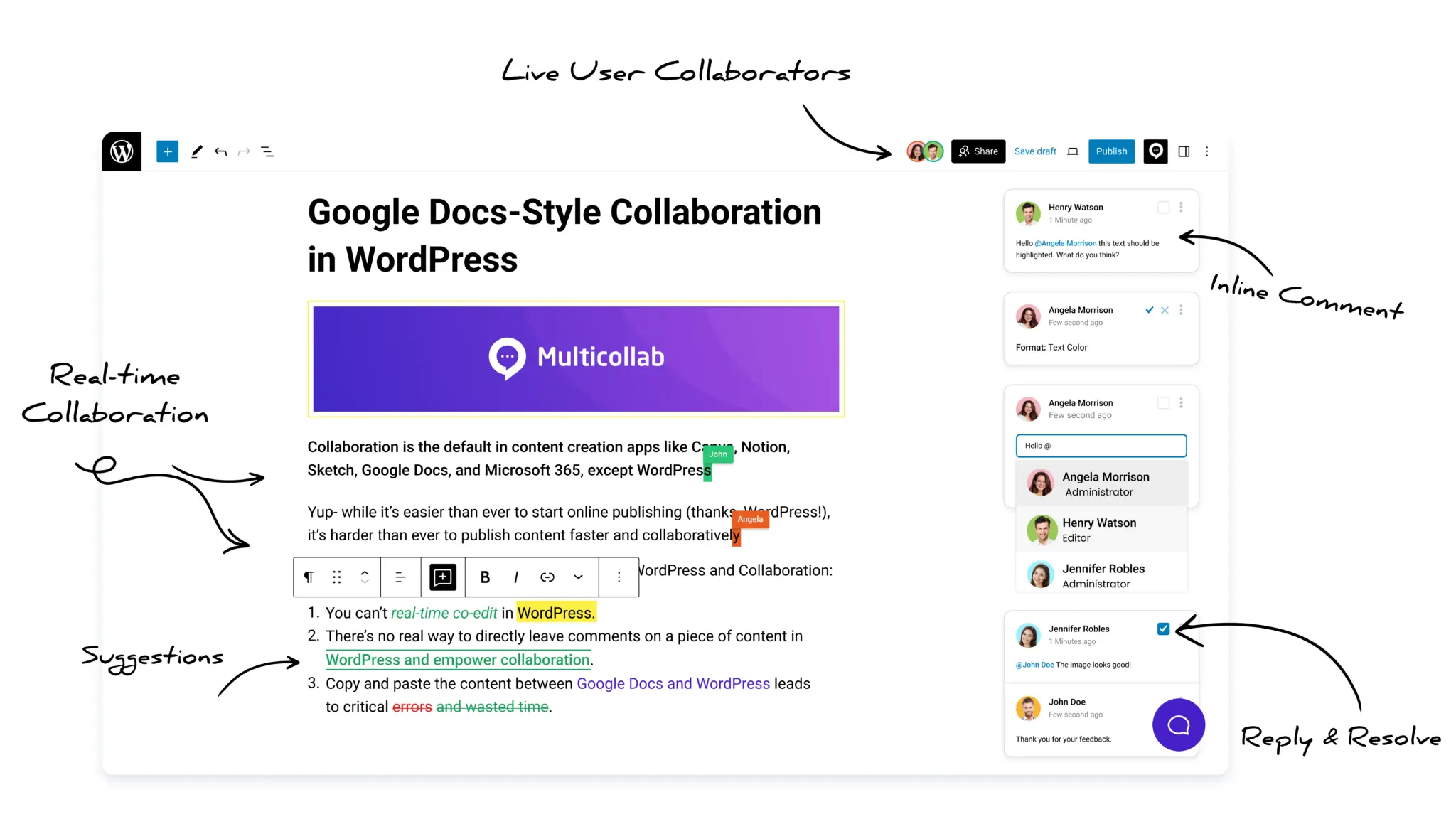
For publishing teams working in WordPress, Multicollab makes that editorial quality achievable at scale by bringing review and collaboration into the editor itself:
- Inline comments and suggestion mode let editors refine drafts in context, so quality checks happen where the content lives (suggestion mode is a Pro feature).
- Content Workflows move every piece through defined review and approval stages, so nothing publishes without editorial oversight (Pro).
- Editorial Checklist enforces your standards, SEO elements, author attribution, sourcing, before a piece goes live (Pro).
- Real-time co-editing lets writers and editors work together on high-priority content (Pro).
By keeping review inside WordPress, teams protect the standards that both search engines and AI engines reward, without the drag of moving content between tools. Our guides on content review best practices and the editorial workflow go deeper on building that process.
Conclusion
SEO for publishers in 2026 is a two-surface discipline: you optimize for traditional search and for AI answers at the same time. The winning approach combines answer-ready content structure, genuine E-E-A-T and author attribution, depth over volume, solid technical foundations, and, increasingly, editorial quality as a ranking asset in its own right.
The publishers who thrive are not the ones producing the most content. They are the ones producing the most trustworthy, well-edited, genuinely useful content, and making it easy for both search engines and AI to recognize that quality.
If your team publishes on WordPress, Multicollab helps you hold that quality bar at scale, keeping editing, review, and approval in one place so every piece meets the standard that modern search rewards.
Start a 14-day free trial. No obligations, no contracts, cancel anytime.
Frequently Asked Questions
What is SEO for publishers?
SEO for publishers is the practice of optimizing a publishing company’s content to rank in search engines and, increasingly, to be cited in AI-generated answers. It spans technical foundations, content quality, E-E-A-T, and editorial process, tailored to the scale at which publishers produce content.
How has SEO changed for publishers in 2026?
The biggest changes are the rise of AI answers (which require Answer Engine Optimization alongside traditional SEO), stronger penalties for thin and unedited content, and greater weight on E-E-A-T and author attribution. Depth and editorial quality now matter more than publishing volume.
What is Answer Engine Optimization (AEO)?
AEO is optimizing content so AI systems, like Google’s AI Overviews, ChatGPT, and Perplexity, can extract, summarize, and cite it. It means answering questions clearly and early, structuring content for easy parsing, and adding schema, on top of traditional SEO.
Why is editorial quality important for SEO?
Google’s helpful content systems penalize thin, unedited content, and AI engines favor trustworthy, well-crafted sources. A strong editorial review process protects the quality and accuracy that both reward, making it a genuine ranking advantage rather than just good practice.
How can publishers maintain content quality at scale?
Use a defined editorial process with clear review and approval stages, author attribution, and quality checklists. Collaboration tools like Multicollab bring that process into WordPress, so large teams can keep standards high without slowing production or losing feedback across tools.
Download a Free Actionable Guide: 45+ Actionable Tips to Optimize Performance for High-Traffic WordPress Websites
Performance Optimization Techniques: Speed up your site with caching, image compression, and code minification.
Hosting and Scalability Suggestions: Learn to choose the right hosting solutions and scale efficiently.
Security and Protection Guidelines: Safeguard your site from DDoS attacks, malware, and performance threats.
Content and Plugin Management Tips: Optimize your database, plugins, and themes for peak performance.